
Let's Light the fuse on Fusion
What is fusion, why is it important and what are some of it's variants

Energy is Power
In a previous newsletter, I claimed (rightfully)that The West Wing is the greatest show of all time. Well, Game of Thrones (at least the first few seasons) sits alongside it in the top 5. And one of the most iconic quotes from that show, from Queen Cersei herself was..

I’m not one to argue with a mad incestuous Queen but I think we should update it for the 21st centure. From “Power is Power” to “Energy is Power.”
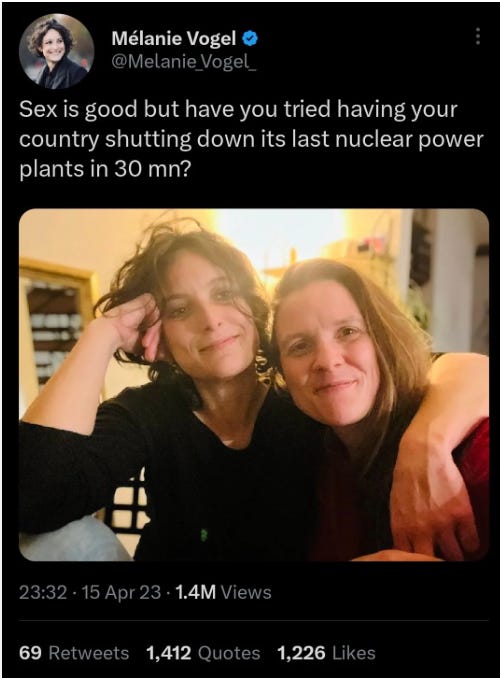
We know that we don’t have enough energy to meet global demand, particularly with the coming growth in AI demand. It’s why cloud companies are re-starting old nuclear plants. We have stupidly exacerbated this problem in the West by our last quarter century societal aversion to building anything larger than a snowman and our idiotic, decelerationist attitude to nuclear power.
Remember this smug decel.
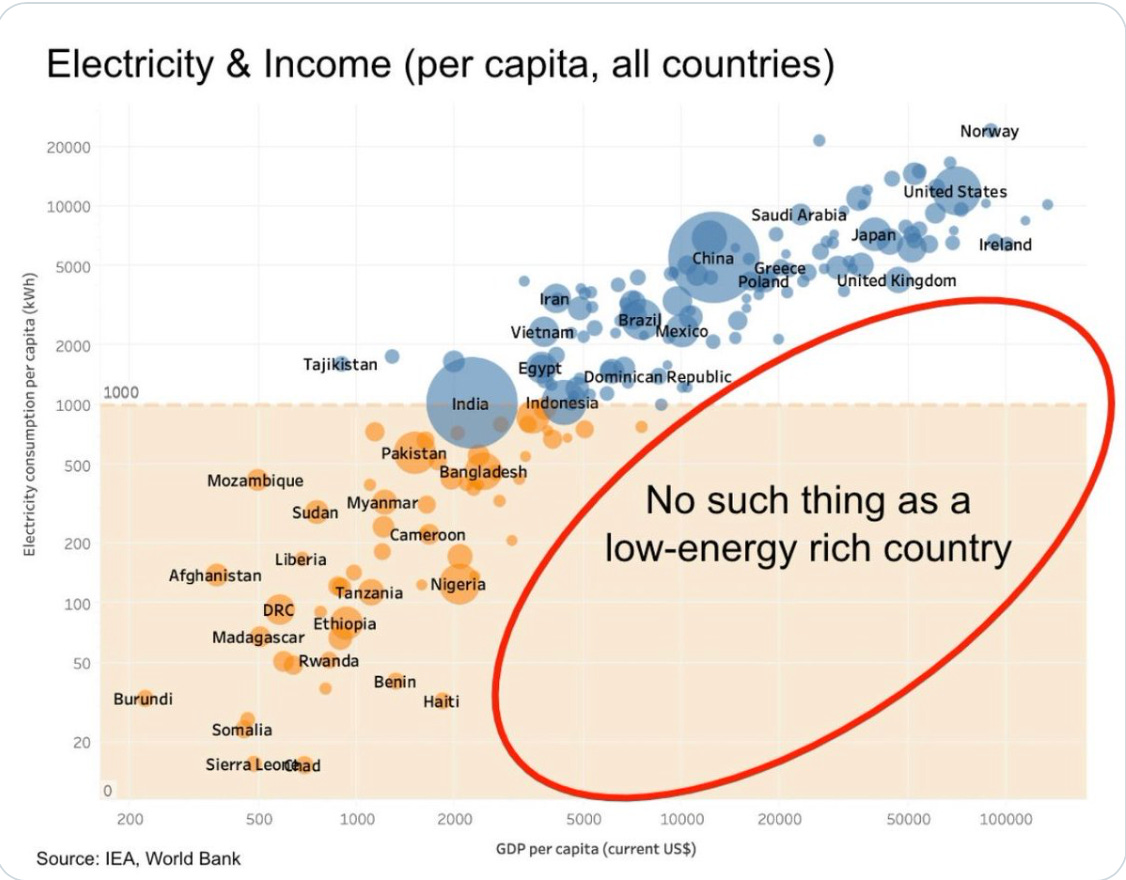
Never forget that there’s no such thing as a low energy, rich country.
OK, so energy needs are increasing, climate is a bit fucked although we are doing things to somewhat unfuck it that your delightful and informative author has written about previously
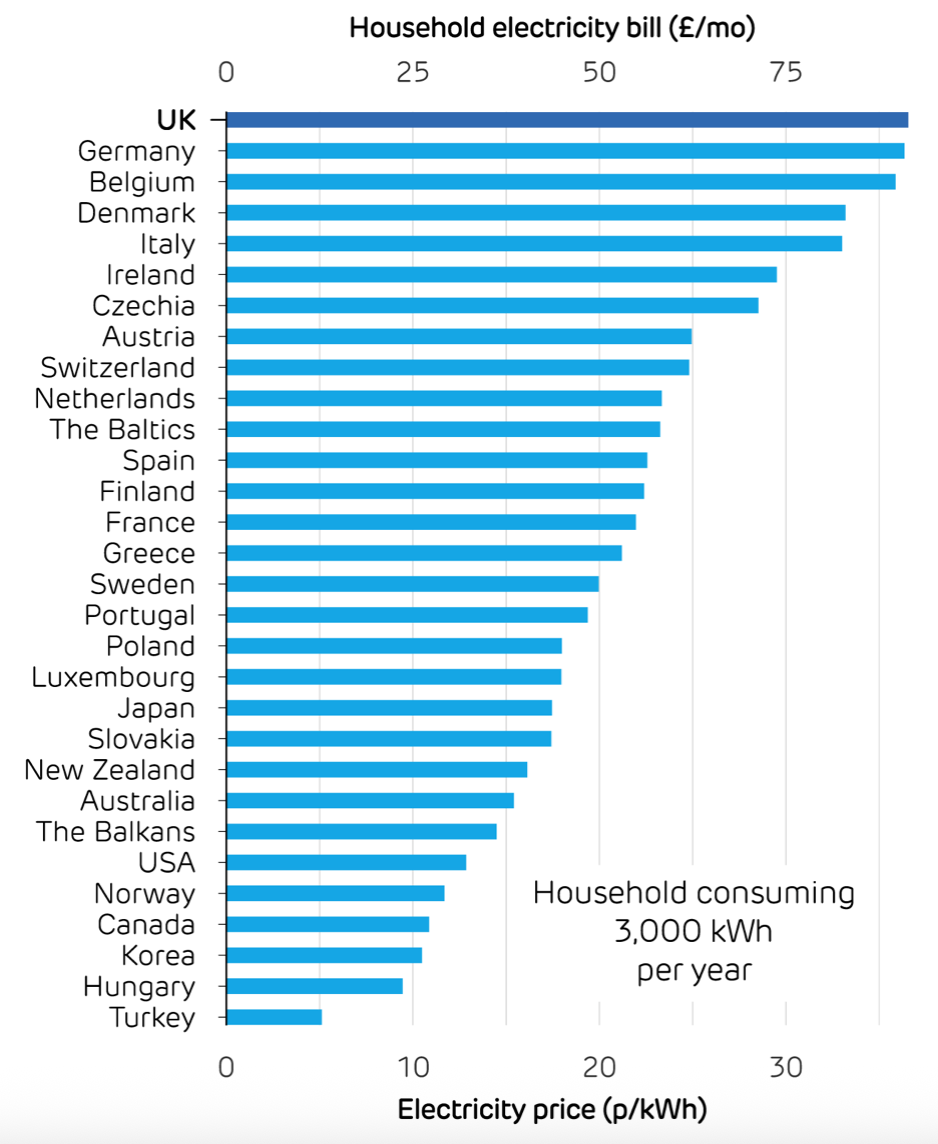
Renewables are cool and all but it isn’t so sunny in London. Or windy sometimes. Which is why the UK still gets 30% of its electricity from gas and it has the most expensive electricity in the OECD. Which is not just terrible for ordinary folks, but it’s also terrible for businesses. All of those costs bleed through into everything we buy or consume.
But, what shall we do Richard? I hear you wail. Well, I say, let me tell you about a little something called fusion.
What is fusion?
Fusion is the process whereby two light atomic nuclei combine to form a single heavier one. This process (which powers our sun) releases a humungous amount of energy. One of those nuclei is deuterium which is abundant in seawater. Half a bathtub full of seawater in a fusion reaction could produce as much energy as 40 train cars of coal.
Why is fusion important?
Other than being a demonstration of how insanely smart we are as humans (“oh yeah bro, just over here replicating the power of the sun, how’s your day going?”) fusion could release 4x more energy per kg of fuel than nuclear power and nearly 4 MILLION times (that’s 4000000x) that of burning coal or oil. Oh and did I mention that it’d be virtually limitless, safe, clean and affordable. Don’t believe me? Read about it here in the IAEA doc.
Holy Cow, can I have fusion right now?
Nope. We’re not there yet. We haven’t yet been able to create fusion successfully. And by not create fusion successfully, I mean we haven’t yet passed the Lawson Criterion which is the threshold when a fusion reaction creates more energy than it consumes.
I mean if we had been able to invent safe, limitless and clean energy, you might have heard about it, right?
In order to make deuterium and tritium (the 2 elements most scientists are using to try and create fusion) to fuse, we need a temperature of 100 million degrees Celsius. We need to do this whilst also regulating pressure and magnetic forces at the same time. Hey, maybe we can get these guys on the case…

Alright so how are we going to do it?
Like I said, we haven’t yet. But there are a bunch of insanely smart people trying to succeed in different ways.
There is Thea using a stellerator. A stellarator is a well-studied magnetic confinement fusion technology and the only system that creates all required magnetic fields using highly efficient, superconducting coils.
There is General Fusion who are focused on Magnetized Target Fusion. MTF uses mechanical compression to create fusion conditions in short pulses, eliminating the need for expensive lasers or superconducting magnets.
Acceleron Energy is developing an intense, high-efficiency muon source to produce beams of muons using significantly less energy than current facilities, and a high-density fusion cell to allow each of these muons to catalyze larger numbers of fusion reactions. What’s a Muon I hear you ask? Well hear me ask it too because I have no idea but feels like it’s pretty important.
And finally, there’s Europe’s own Proxima Fusion which is also focused on stellerators. These ones are quasi-isodynamic (QI) stellarators, a magnetic confinement approach in which toroidal currents cancel out to zero, resulting in uniquely robust features.
The scientific basis for QI stellarators has been spearheaded by their partners at the Max Planck Institute for Plasma Physics (for example, Helander & Nührenberg, PPCF 2009 and Goodman, Xanthopoulos, Plunk et al., PRX Energy 2024).
$$$
And there’s serious money also betting that now is the time for fusion. The top 10 fusion companies have raised $2.8bn combined from top tier investors like Plural, Lightspeed, YCombinator and Lowercarbon Capital . Now, just because money chases technology, doesn’t mean it’ll succeed (cough, cough Metaverse, cough, cough) but there’s a big difference between a consumer technology that consumers don’t care for and scientific breakthroughs happening linearly.
Paul Smith, Partner at Lightspeed, wrote down some of his thoughts from an investor perspective in fusion here so there are definitely reasons to be hopeful that our future can and will include fusion of some type.
Conclusion
From stellerators to tokamaks to magnetised target fusion, we don’t know which one will win (why not all of them) but some of the smartest minds on earth are working on fusion right now. And I for one am optimistic. Hope you are too.