
Optimistic Tech Newsletter: Editing DNA to cure Orphan diseases
Changing our DNA to cure 1 in a million diseases

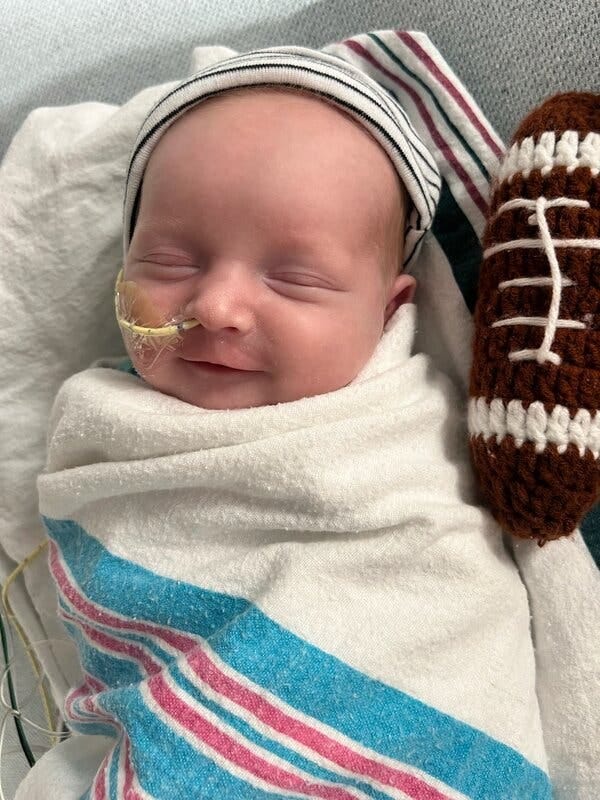
A return to the original point of this Substack to outline a fairly amazing technological advancement: base editing.
In around October last year, you may have seen the picture above plastered across newspapers and websites - Baby KJ as he’s known was saved by a revolutionary advancement: base editing. Not only did it save baby KJ but it could save millions more.
Orphan Diseases
Did you know that there are diseases and disorders so rare that, as heartless as it sounds, it doesn’t make financial sense for a pharmaceutical company to focus on cures for them. These are called “Orphan diseases” and in order to make it worthwhile to cure them, pharma companies require governments to incentivise them with large bags of cash.
Carbamoyl Phosphate Synthetase I deficiency (CPS1) is one of these diseases affecting only about 1 in 1.3m babies. CPS1 affects the body’s ability to remove ammonia. Half of all babies born with it die within their first week of life and even for babies that survive, they would typically have severe mental and developmental delays and would eventually need a liver transplant.
There are no cures for CPS1 deficiency and diseases with similar rarity because, as I mentioned, there’s no moolah in it. But, what if, rather than a cure, we could create a way to treat diseases like CPS1- a mechanism - and then we could apply that same mechanism to other, similarly rare diseases? That would be pretty cool and that’s exactly what happened.
(Side note: yes I do work at Amazon and yes, we are obsessed with mechanisms but I promise you that in this case, it’s justified)
Base Editing
Let’s talk about base editing. CPS1 deficiency (and other diseases like it) is caused by a single DNA letter mutation in the 3 billion letters in the human genome. Base editing is a way to change that single letter without fucking up the rest of your DNA. It’s like using an eraser to fix a typo in a book without tearing out the page.
In practice, the treatment is injected inside some fatty lipid molecules and given directions to the mutation using CRISPR. CRISPR basically crawls along your DNA until it finds the gene that needs editing and then BAM! here comes the treatment.
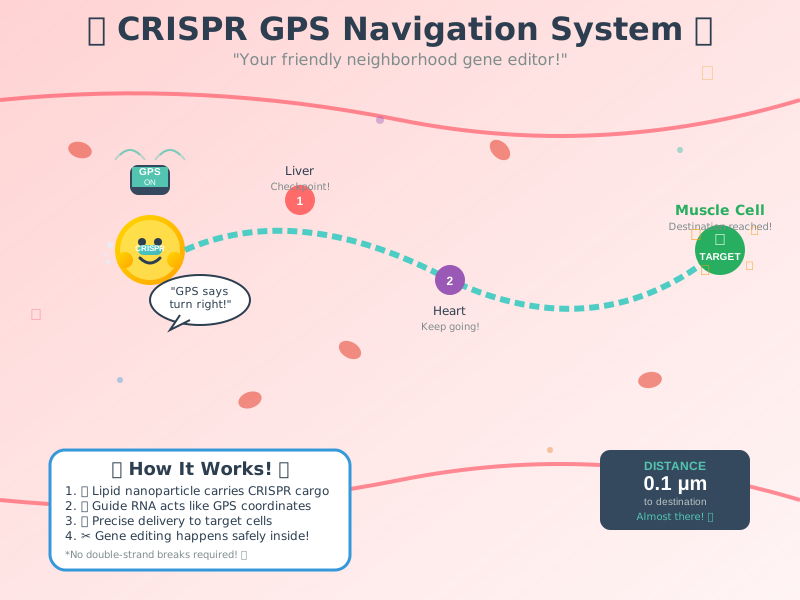
Stop for a minute and think about that. We’re literally capable of CHANGING DNA to save lives!
In baby KJ’s case it was essentially bespoke medicine built for an individual. And after 3 treatments, he’s going to be discharged from the hospital where he’s spent his entire life and he’s gone from being in the 9th percentile in weight to the 40th and meeting all other developmental milestones.
We’re in the early stages of base editing but once you think about it, you realise the huge implications for other diseases, not just orphan ones, like sickle cell disease, cystic fibrosis, Huntington’s disease and muscular dystrophy.
OK who’s the genius behind all this
The race to save baby KJ was a collaborative effort across multiple doctors, scientists and phrama companies. But the guy most credited with the base editing breakthroughs is David Liu.
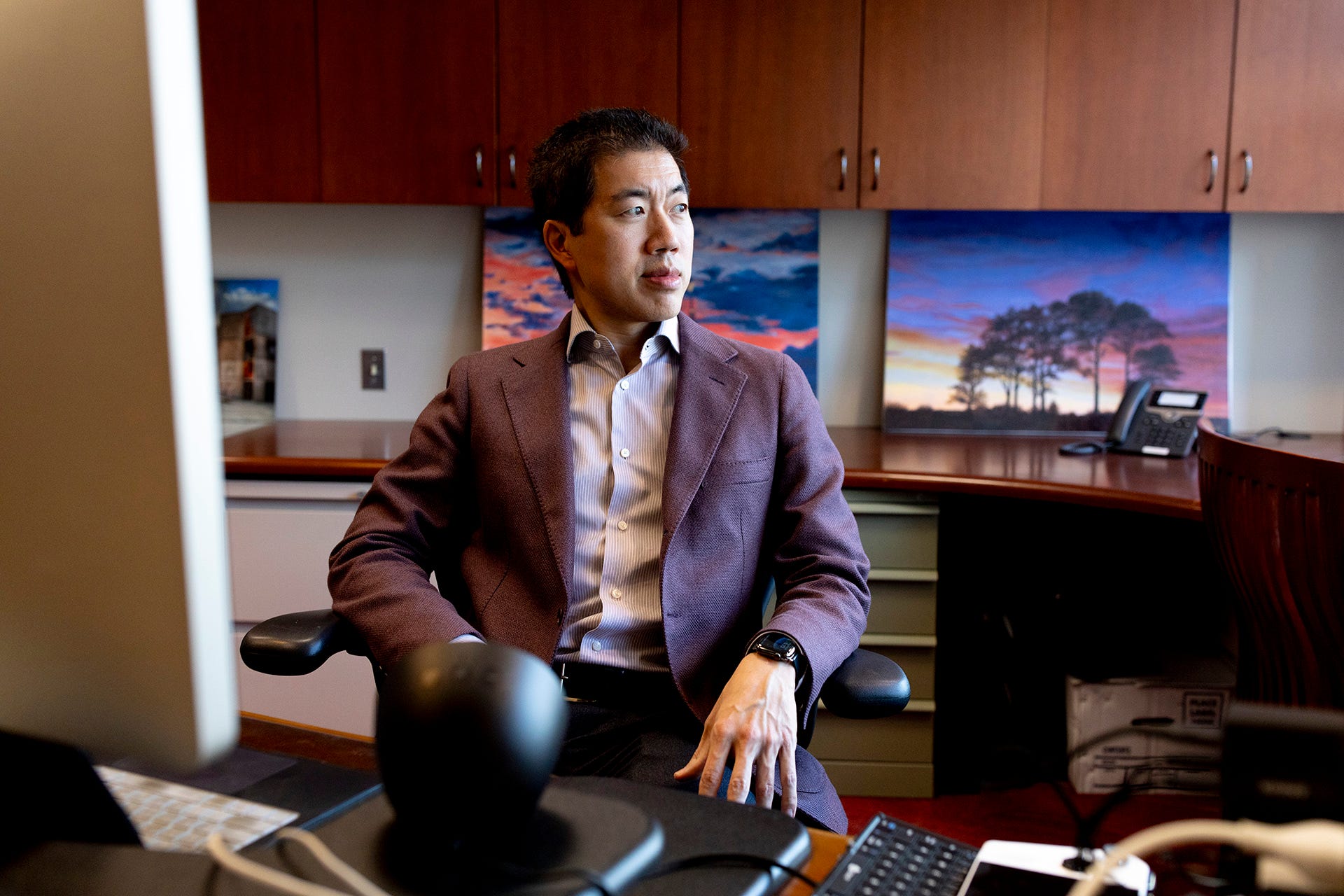
Let me list some of the accolades of this guy so you get an idea of the boss level we’re dealing with here: Liu is the Richard Merkin Professor and director of the Merkin Institute of Transformative Technologies in Healthcare, vice-chair of the faculty at the Broad Institute of MIT and Harvard, the Thomas Dudley Cabot Professor of the Natural Sciences at Harvard University, and a Howard Hughes Medical Institute (HHMI) investigator. Liu has been elected to the U.S. National Academy of Sciences, the U.S. National Academy of Medicine, and the American Association for the Advancement of Science. He is the 2022 King Faisal Prize Laureate in Medicine. He has earned several University-wide distinctions for teaching at Harvard, including the Joseph R. Levenson Memorial Teaching Prize, the Roslyn Abramson Award, and a Harvard College Professorship. Liu has published more than 220 papers and is the inventor on more than 85 issued U.S. patents.
Liu shies away from calling his technologies a cure: “Scientists are reluctant to use that word until there’s evidence of years without any apparent symptoms of the disease,” he said. But, he added, “The writing’s already on the wall: In some of these clinical trials, the patients are no longer on any medication and don’t have any symptoms of the disease.”
What’s next
The thing about base editing is that baby KJ wasn’t the first patient. That was Alyssa Tapley in the UK, a 13 year old whose T-cell leukemia was cured. Liu has helped co-found a number of companies who are building on his research to help cure further diseases. One, Prime Medicine, recently announced positive results for it’s therapy for chronic granulomatous disease. It also opens the door to treating diseases like Progeria and Tay-Sachs.
Beyond base-editing is Prime editing which is similar but expands the scope of the DNA that can be edited, thereby expanding the scope of diseases that can be treated. Maybe I’ll get more in-depth on that in a future post.
Why optimistic for the future?
Feels like the ability to cure rare, genetic diseases is an obvious win for the future of humanity. Liu is concerned about current uncertainty about government funding to which I’d say come to the UK!! Hopefully that was a nice positive tech note to kick off 2026!
Where can I find out more?
If you want to read any of my other posts about tech that’s optimistic for the future of humanity, check it out here